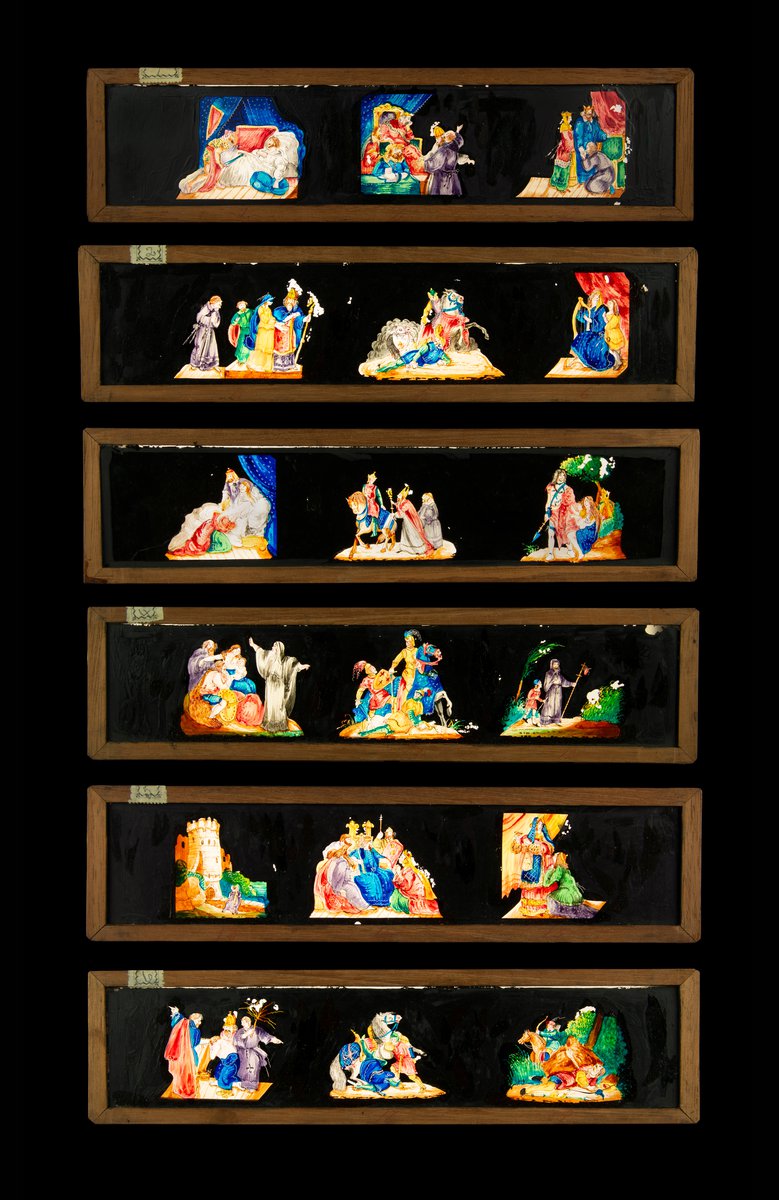
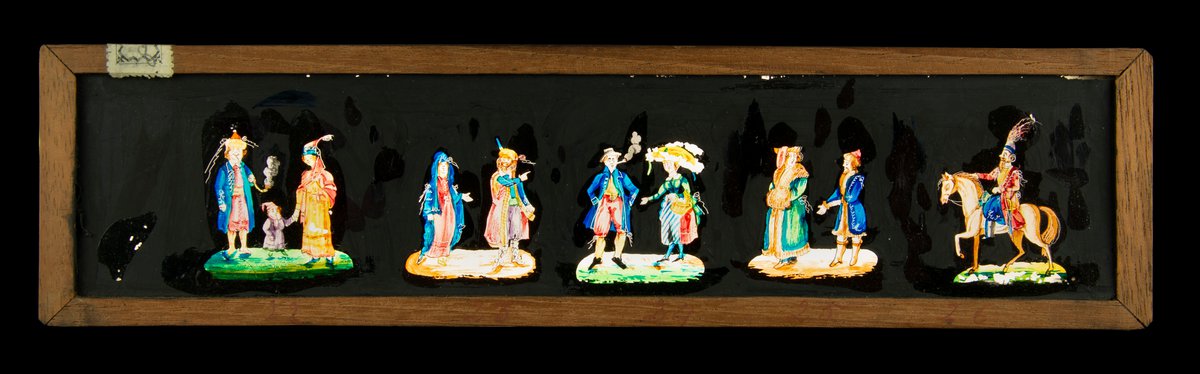
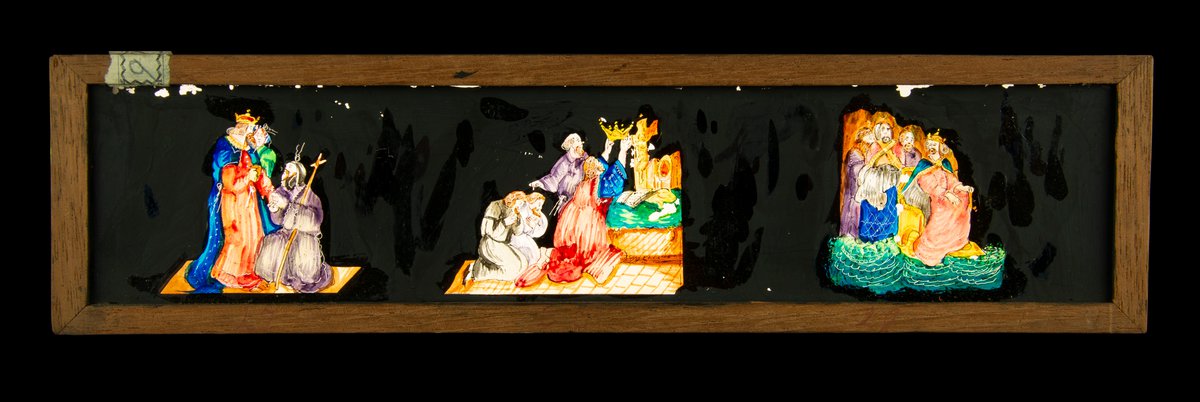
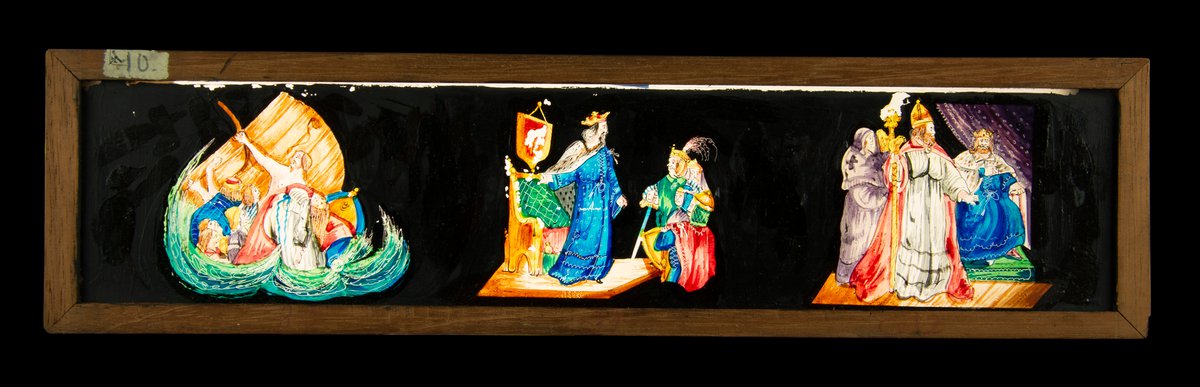
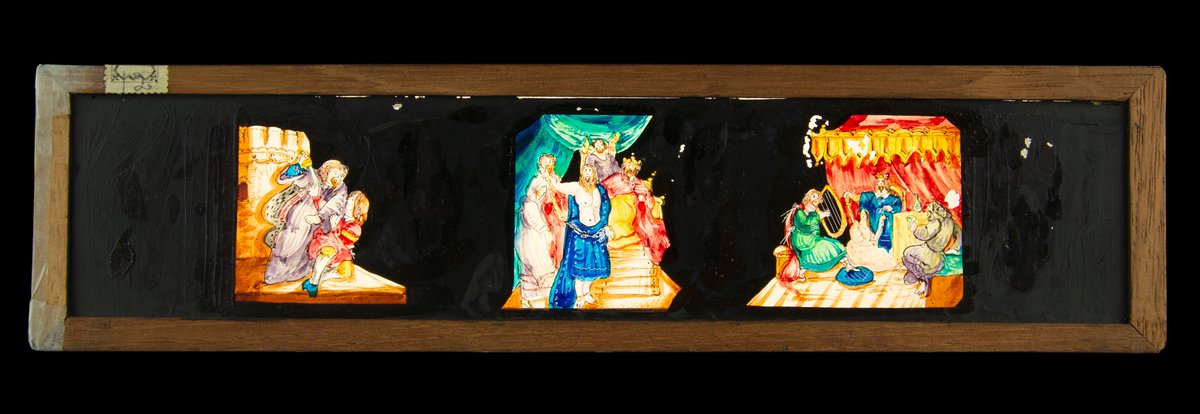
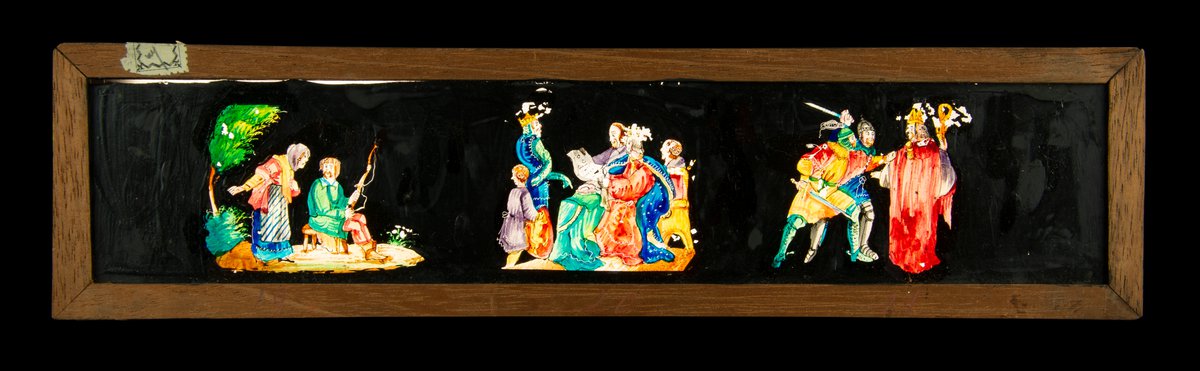
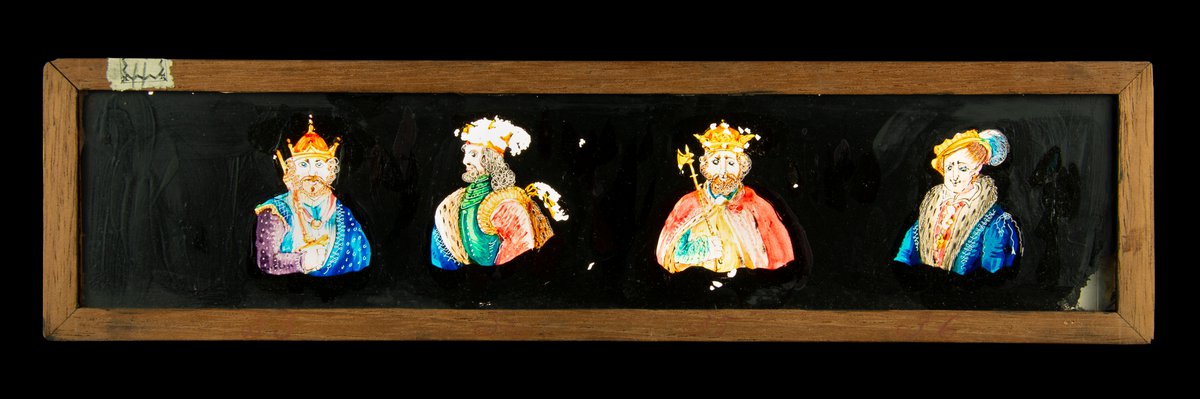
The earliest magic lantern slides were drawn and coloured by hand, using transparent pigments that were most often oil-based. Drawing and colouring wasn’t easy because the slippery glass surface meant the pigment could run, blurring the intended detail. Even worse, the smallest aberrations or errors would be magnified by the projection, so artists needed to be highly skilled and develop specialist tools for these minute details. The changing technology of the magic lantern influenced the way the images were painted and manufactured, with the invention of better illuminates and optical systems demanding even more detailed transparent paintings. Panoramic lantern slides allowed lanternists to progress the narrative without changing over the lantern slides, making for smoother presentations and increased drama and delight from audiences.
Works in this group
Related works
Collection
Not in ACMI's collection
On display until
16 February 2031
ACMI: Gallery 1
Credits
creator
Maker not documented
Collection metadata
ACMI Identifier
Curatorial section
The Story of the Moving Image → Moving Pictures → MI-02. Play and Illusion → MI-02-C01